
This design was for a small garden in southern England, for a client who not only has her own children but also works as a childminder. The garden, therefore, needed to be rationalised and laid out better, so that it would work well for the family themselves, their chickens, their dog, and for all theContinue reading “Case Study: Child-Friendly Garden Design”
Category Archives: Case Studies
Case Study: Philippines Permaculture Plan

This concept design, which I completed late last year, outlines a holistic plan for a small farm on the island of Guimaras, in the Philippines. The plan will bring together work already completed on the property, to create a naturally harmonious ecosystem which meets human needs while nurturing the environment and boosting biodiversity on theContinue reading “Case Study: Philippines Permaculture Plan”
Case Study: Oregon Permaculture Garden Design

This overview concept design is for a garden in the Pacific Northwest, around Eugene, Oregon. The garden is towards the south of the Willamette Valley, between the Coastal Range and the West Cascades, in zone 8b. The client was looking for a design that would allow them to grow as much food as possible, withContinue reading “Case Study: Oregon Permaculture Garden Design”
Case Study – Slope Retention & Landslip Repair
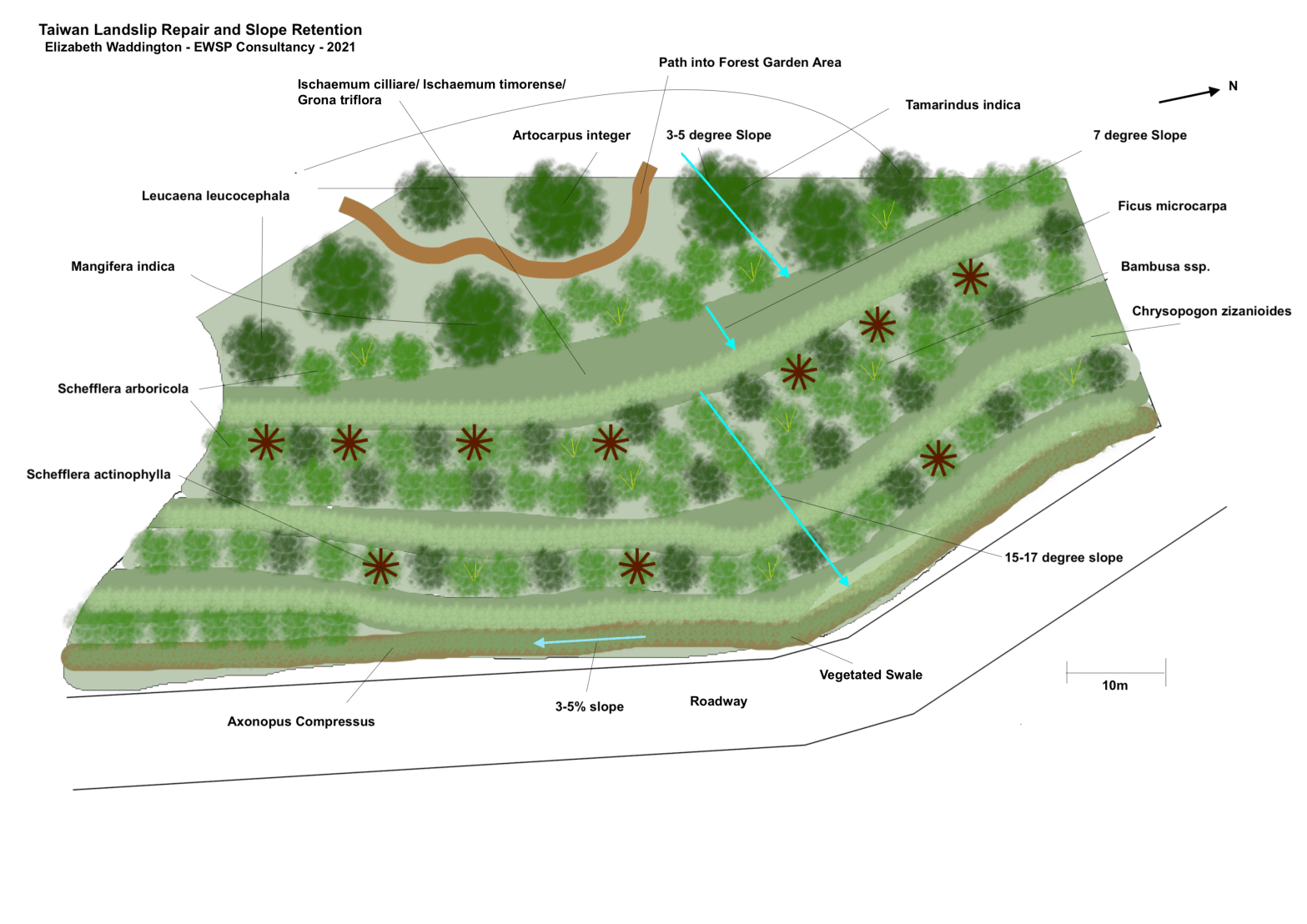
This is a case study which involved the repair of a roadside slope on the edge of a property in Taiwan. On the edge of an existing fruit plantation where an agroforestry approach is newly being taken, there is this slope of 15-17% (approximately 25 x 90m) leading down to a local road. In thisContinue reading “Case Study – Slope Retention & Landslip Repair”
Case Study: Eco Build Garden
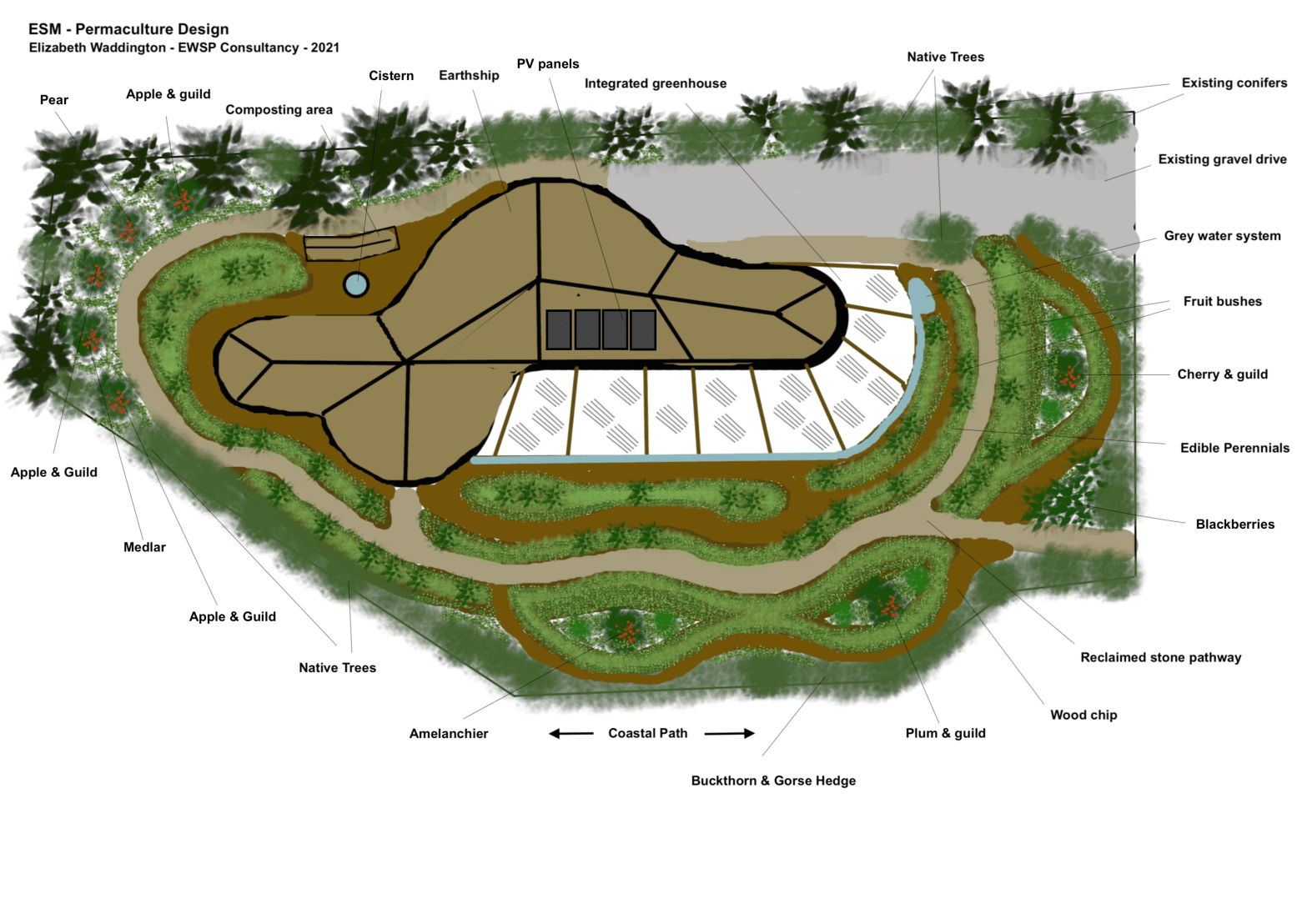
This case study demonstrates a garden plot around a planned eco build on the south coast of England. The design aims to ensure visual amenity and appeal while maximising food production and making best use of resources on this small site. The site is approximately 250 sq m in size, located between farm fields andContinue reading “Case Study: Eco Build Garden”
Case Study: Arizona Permaculture

This recent case study for Arizona takes me to a climate and environment very different to my own. The major challenges tackled in this design relate of course to water, and intense summer heat. My design seeks to work with the existing, while offering solutions for all the family who live here’s requirements and desires.Continue reading “Case Study: Arizona Permaculture”
Case Study: Tennessee Permaculture
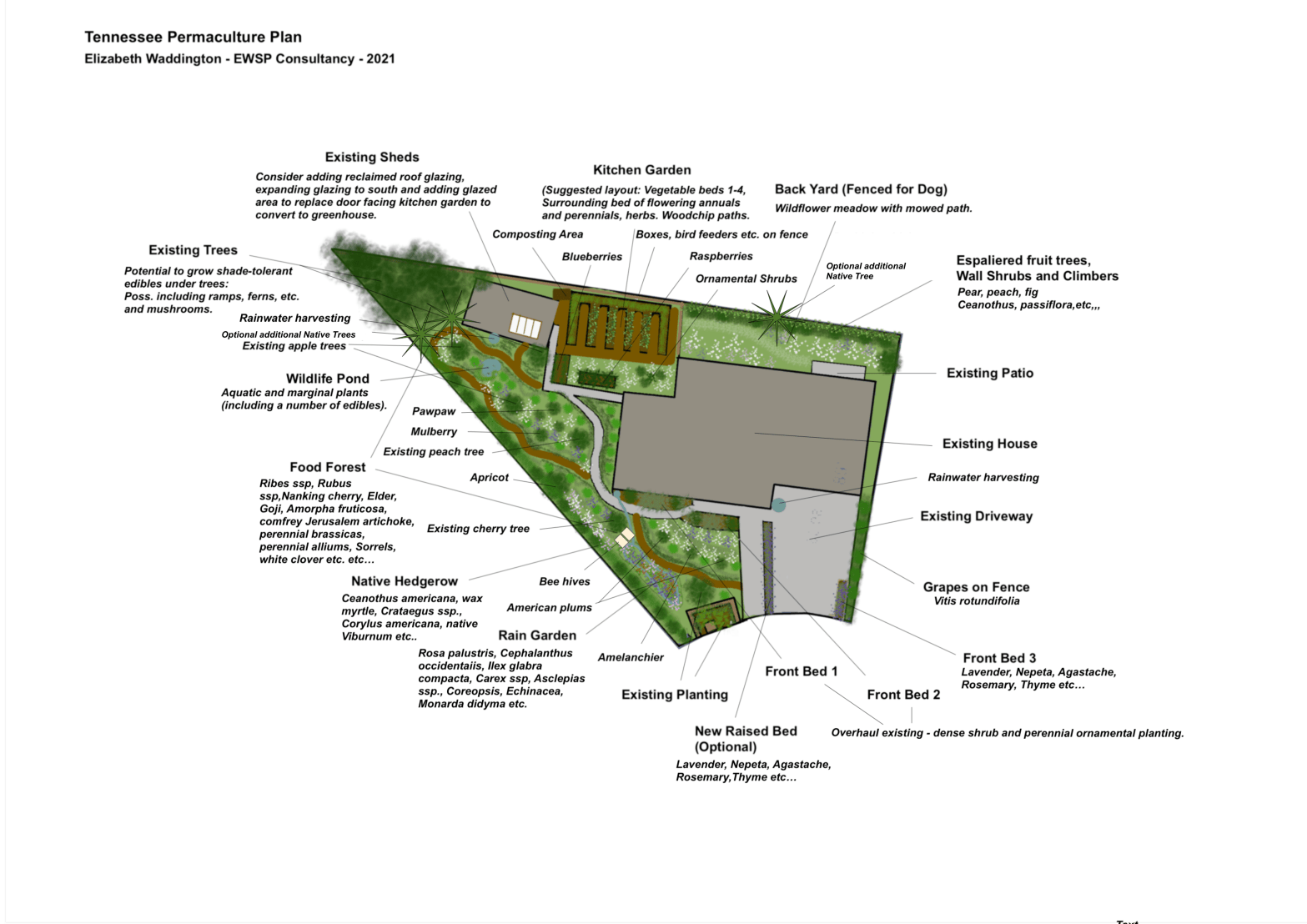
This example shows some recent work for a garden in Tennessee. This is in zone 7a, with a frost free period of 190 to 200 days, mean annual air temperature of 57-61 degrees F, and 46-60 inches annual precipitation. The predominant soil of this area is a silt loam, free draining and moderately acidic. OneContinue reading “Case Study: Tennessee Permaculture”
Case Study: Chateau Permaculture
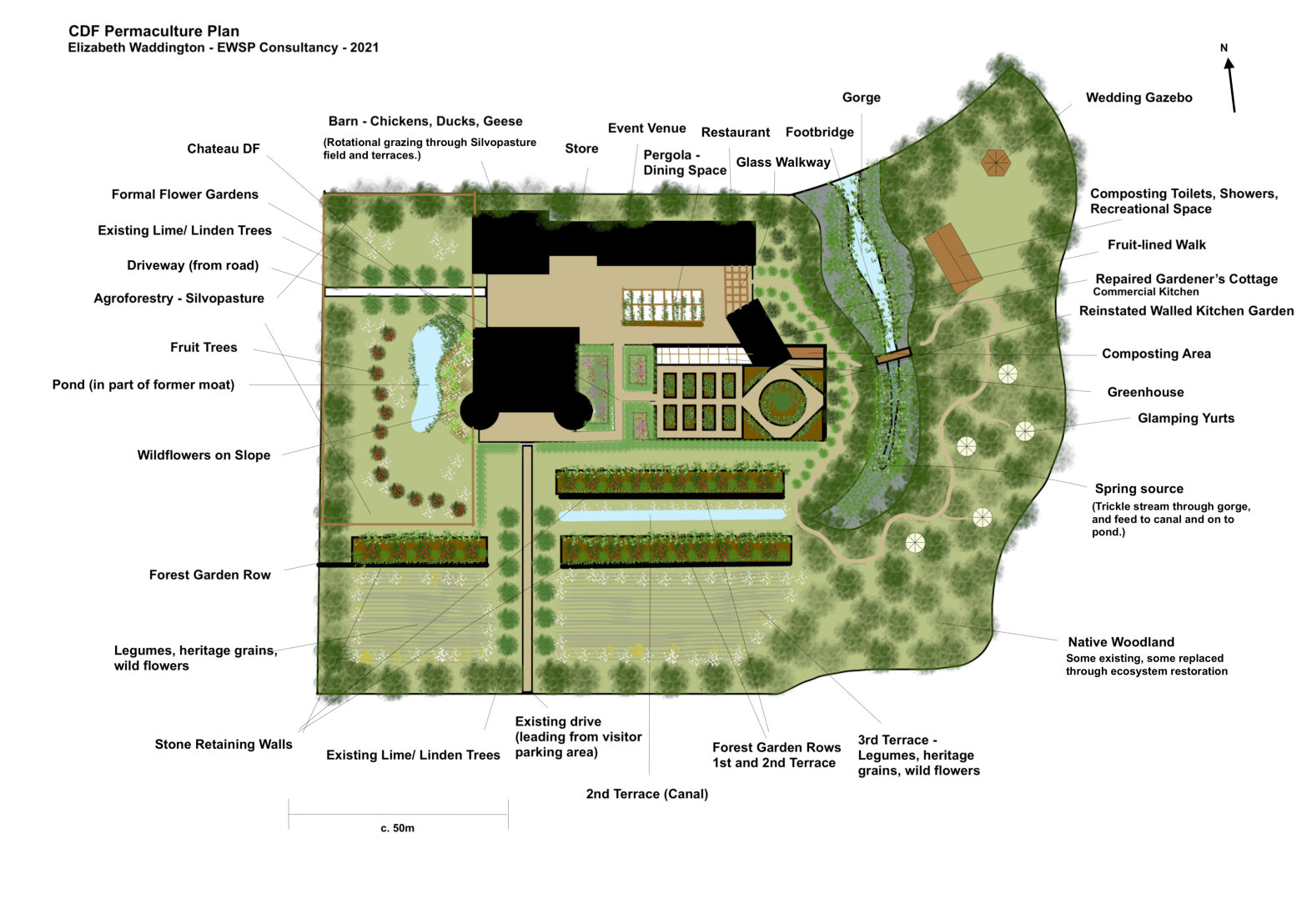
This is a concept design for a chateau in France, which is currently in the process of renovation. The new owners are saving the partially derelict buildings, and will be utilising the land for weddings and events, a glamping site, and a sustainable food production and restaurant business, and wanted some help to visualise theContinue reading “Case Study: Chateau Permaculture”
Case Study: Tiny Home Agroforestry and Rewilding

When people acquire a piece of land, often, their first thought is to erect a large home on it. But as this interesting project demonstrates, we can live much more lightly on the land. This plot in Scotland comprises almost a hectare (just under 2.5 acres) of marginal land but will accommodate a wooden cabinContinue reading “Case Study: Tiny Home Agroforestry and Rewilding”
Case Study: South Carolina Permaculture Plan
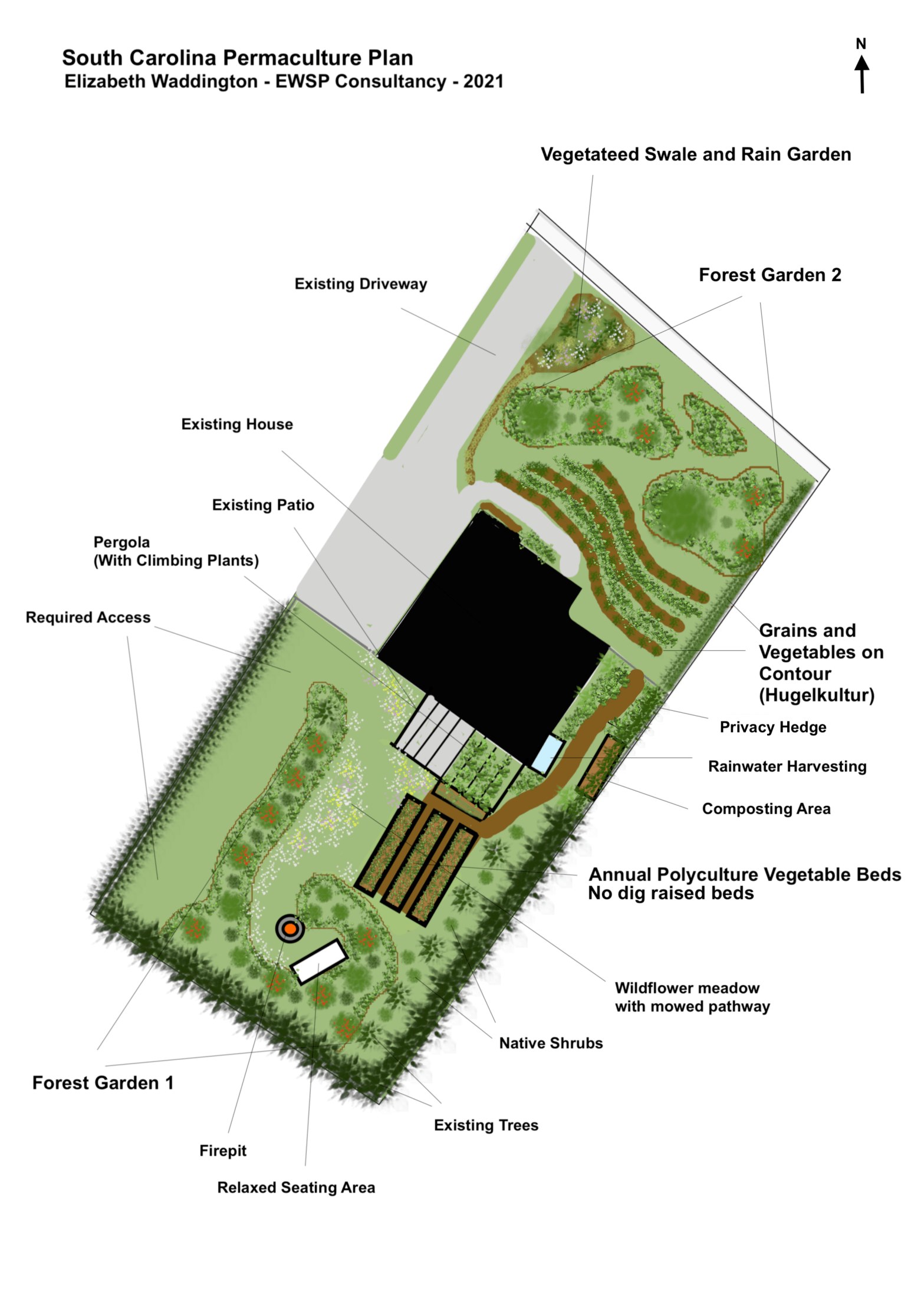
This is a recent concept design for a property in South Carolina, where the needs of a family of three and their dogs must be met. This garden in USDA hardiness zone 7b slopes down very slightly from the south west to north east, with a slightly more pronounced slope down from the front ofContinue reading “Case Study: South Carolina Permaculture Plan”
 EWSP Consultancy