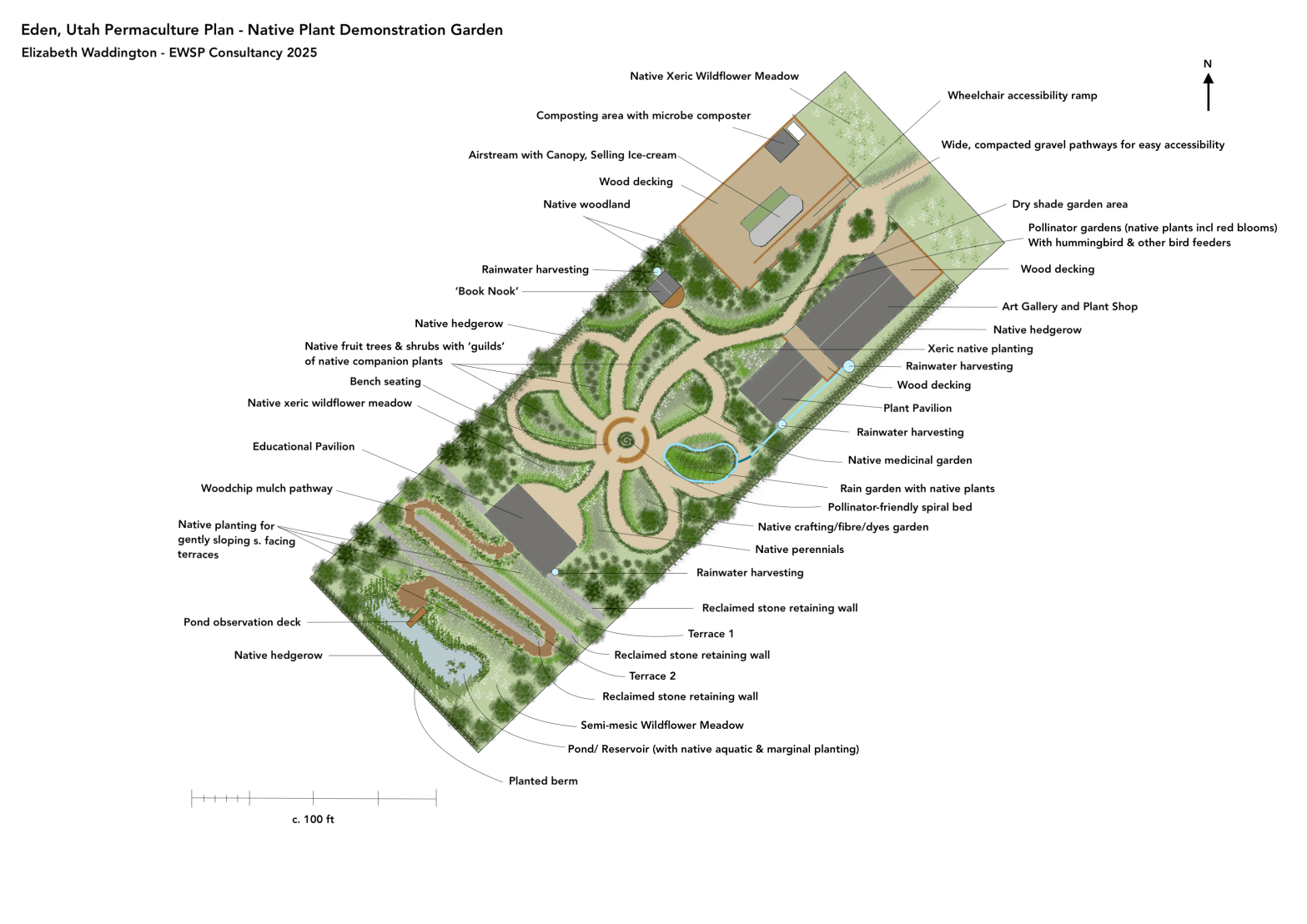
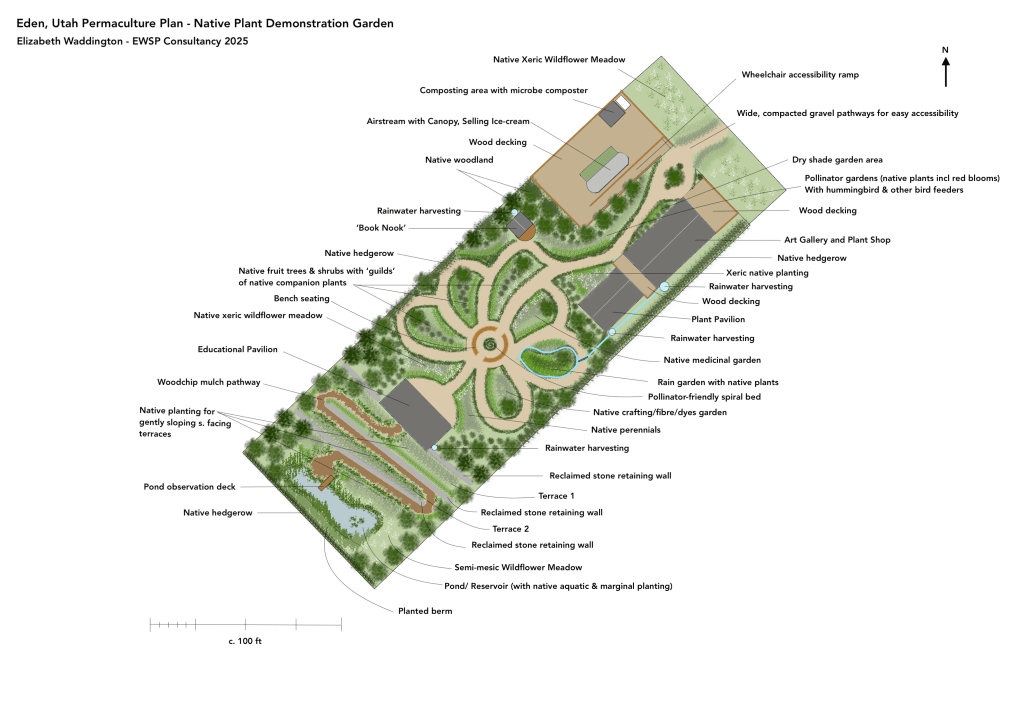
This project from late last year sets out to create a beautiful, welcoming, and inspiring native plant demonstration garden that celebrates the unique character of northern Utah’s native landscapes.
The goal is to show how gardens and community spaces in the region can thrive with less water, fewer inputs, and greater ecological sensitivity while still offering colour, interest, and a strong sense of place throughout the year.
At its heart, the garden is designed to help people reconnect with the plants, soils, and natural patterns that give this part of Utah its distinctive charm. By showcasing native meadows, woodland pockets, terraces, rain-fed plantings, and pollinator-friendly habitats, the project aims to demonstrate how regenerative design can support wildlife, build healthier soils, and create resilient outdoor spaces suited to a changing climate.
This is also a space for learning and enjoyment. The layout encourages visitors to explore, discover, and experience first-hand how water can be harvested and used wisely, how diverse planting can reduce wildfire risks, and how thoughtful design can make even challenging sites feel alive and inviting. Whether people come for education, inspiration, or simply a peaceful place to wander, the garden is intended to be accessible and engaging for all.
Ultimately, the aim is to create a living example of what’s possible when we work with local ecosystems instead of against them – a place that supports people and nature together, and sparks ideas that can be carried back to homes, schools, and communities throughout the region.
About the Site
Eden is located in the high-altitude Ogden Valley of northern Utah, at approximately 4,900–5,000 feet (c. 1500m) above sea level. The region experiences a continental, semi-arid climate, characterised by hot, dry summers and cold winters with significant snowfall. Annual precipitation averages around 20–25 inches, with the majority falling as winter snow or during short-duration convective storms. Long dry periods are common in late spring and summer, making water availability a primary design consideration.
Seasonal temperature variation is pronounced. Summer highs frequently exceed 29.4 to 35°C (85–95°F), while winter lows often fall below -6°C (20°F). The site is subject to strong sunlight at high elevation, substantial diurnal temperature swings, and periodic valley winds that contribute to drying conditions. Soils in the area tend to be well-drained, often sandy or loamy with low organic matter, and prone to erosion where vegetation cover is sparse.
These combined factors create a landscape where drought tolerance, soil protection, and efficient water management are essential. Native plant communities in the region have adapted to low water availability, intense sunlight, and temperature extremes, making them appropriate for long-term resilience.
Wildfire risk is a growing concern throughout the Intermountain West, including Eden. Hotter, drier summers, increased variability in snowpack, and the spread of highly flammable invasive grasses contribute to elevated ignition potential. The site’s open exposures and prevailing summer winds can accelerate the spread of fire across dry vegetation. Designing with defensible space principles, discontinuous fuel zones, fire-resistant native species, and integrated water retention features is therefore critical to reducing vulnerability.
Overall, the climatic and ecological conditions in Eden demand a design approach that prioritises drought resilience, soil stability, biodiversity restoration, and wildfire mitigation, ensuring the site remains functional, safe, and ecologically robust under current and future climate pressures.
The site lies within the Intermountain West bioregion, specifically in the Wasatch Mountains-Great Basin transition zone. This area forms an ecological meeting point between high-elevation montane systems and the broader semi-arid basins that define much of Utah.
Eden sits within a mountain valley influenced by montane, foothill, and shrub–steppe ecosystems, each contributing plant communities that once occurred across the area in a mosaic of habitats.
Native Plant Demonstration Garden
Since the primary goal for this project is to create a native plant demonstration garden, the design aims to aims to showcase the diversity of ecosystems found within the wider bioregion and to make these communities accessible, understandable, and inspiring for visitors.
By arranging the landscape into distinct but interconnected habitat types, the garden illustrates how native species function in their natural contexts and how these patterns can be adapted for home gardens, public spaces, and restoration projects. Areas of the site also aim to show the potential of native plants to provide edible medicinal, and other useful yields, and also emphasize the crucial ecological roles native plants play in supporting bees, butterflies, birds, and other beneficial organisms.
The main ecosystem types represented within the design include:
1. Xeric Wildflower Meadow
This area reflects the dry, open grasslands and forb-rich meadows typical of the valley floor and lower slopes. It highlights drought-adapted bunchgrasses and hardy perennial wildflowers that thrive with minimal irrigation, offering seasonal colour and strong pollinator support. The meadow demonstrates how native grasses and forbs can create a vibrant, low-water landscape with high ecological value.
2. Native Woodland Zones
The Native Woodland area draws inspiration from the mixed montane and foothill woodlands found on the cooler slopes surrounding Eden and throughout the Wasatch Range. These woodlands typically occur in pockets where moisture availability is slightly higher—north-facing exposures, draws, and sheltered slopes—and where snow lingers a little longer into spring. They support a mosaic of deciduous and coniferous species along with a rich understory of shade-tolerant herbs, grasses, and shrubs.
In this demonstration garden, the woodland zone showcases how tree and shrub layers can be used to create cooler microclimates, protect soils, and add structural diversity to a landscape.
It highlights native species that naturally cope with strong seasonal variation: cold winters, bright summer light, and dry periods punctuated by occasional storms. By creating dappled shade and accumulating organic matter through leaf litter, this area demonstrates how woody natives help build healthier soils and conserve moisture over time.
The woodland planting also offers valuable habitat benefits. Trees and shrubs provide food, nesting areas, and shelter for local birds and small mammals, while the understory supports pollinators and decomposers.
3. Native Shrub Hedgerows
Hedge lines of native shrubs on the north west, south west and south east sides of the property echo the shrub–steppe and mountain brush communities of the Wasatch foothills. Species selected will demonstrate the value of woody natives for wildlife habitat, wind buffering, seasonal interest, and more. The hedgerow also serves as a living corridor for birds and beneficial insects.
4. Rain Garden & Pond – Moist Planting Zones
The rain garden and pond edges represent the more mesic ecological niches that form along natural drainage pathways, riparian margins, or depressions that collect stormwater. It demonstrates how native rushes, sedges, flowering perennials, and moisture-loving shrubs can be used to manage runoff, increase infiltration, and support a broader range of wildlife.
5. Semi-Mesic Meadow
Inspired by slightly moister transitional areas found near foothill seeps or snowmelt zones, the semi-mesic meadow introduces species that tolerate occasional supplemental moisture. It provides a contrast to the xeric meadow, showing how subtle shifts in water availability and soil depth influence plant composition and structure.
In addition to the above, different zones of the demonstration garden showcase the different uses and yields of native plants. There are areas that focus on:
- Pollinator attraction (and the attraction and support of other native wildlife).
- Edible natives (with fruit trees and fruiting shrubs with layered underplanting – following the concept of the ‘forest garden’).
- Medicinal native plants.
- Native plants for crafting, fibre and dyes.
- Strategies and planting for sloping sites.
Overall, the plan aims to showcase resilient, regenerative water stewardship, turning limited precipitation into a reliable resource and demonstrating how thoughtful design can support rich ecological function in a dryland landscape.
 EWSP Consultancy