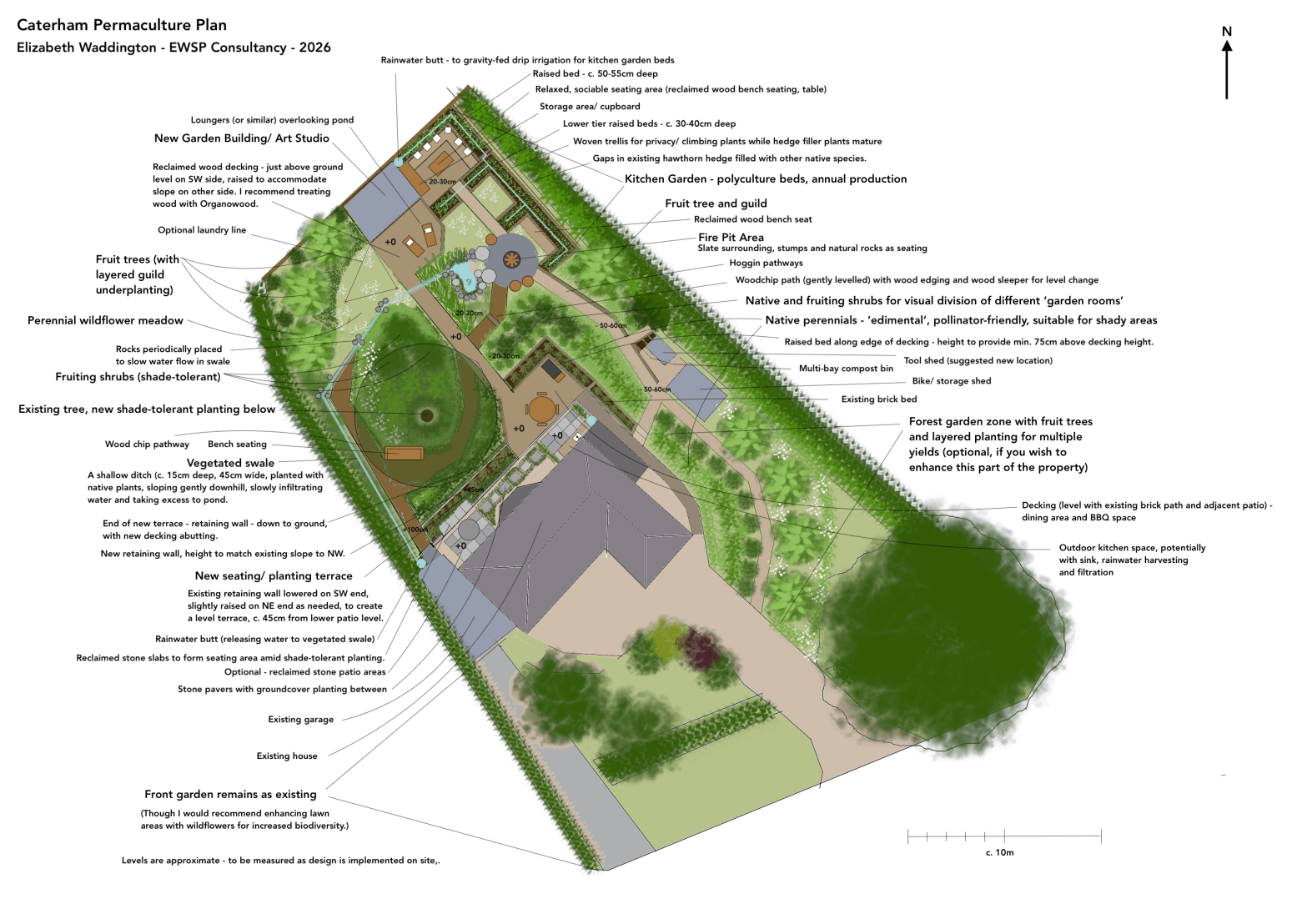
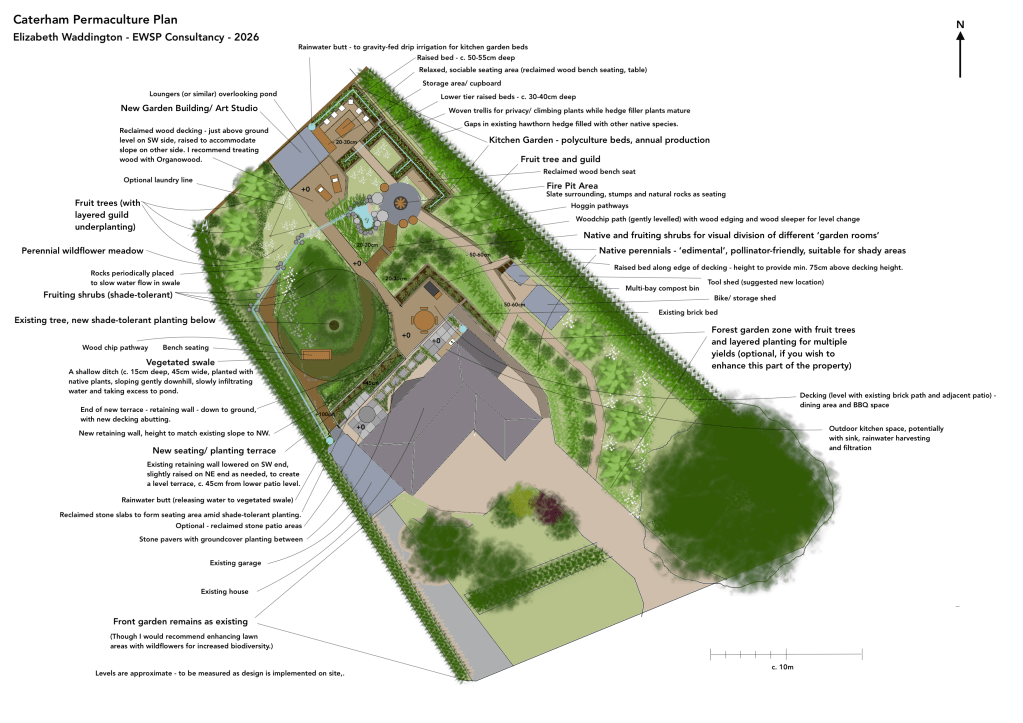
Above is a concept design I created recently for a client in England. The aim of this concept design is to create a garden that feels natural, abundant and inviting, while remaining practical and relatively low maintenance. The plan works with the existing characteristics of the site, particularly its slope, existing trees, and boundary hedging, rather than significantly altering them.
The design divides the garden into a sequence of connected “garden rooms”, encouraging movement through the space and creating different areas for relaxation, growing food, and enjoying wildlife. Each area has a slightly different character, from the more social spaces near the house to quieter and more productive areas further down the garden.
Key principles guiding the design include:
• Minimal disturbance of the existing landscape, with only light terracing where necessary to improve usability and accessibility.
• Ecological planting systems, including forest garden planting, native wildflowers, and pollinator-friendly species.
• Food production integrated into the landscape, including fruit trees, shrubs, and productive polyculture beds.
• Water management, allowing rainfall to be absorbed into the soil through planting, a vegetated swale and a small wildlife pond.
• Natural materials and informal aesthetics, using reclaimed wood, stone, and organic shapes wherever possible.
The overall intention is to create a garden that feels both structured and natural, providing beauty, biodiversity, and productivity for many years with relatively modest ongoing input.
Terracing and Levels
The garden’s slope is used as an advantage while still improving usability. Light terracing creates functional areas without major earthworks.
Raised beds and decking help create level spaces while largely retaining the natural form of the land, excepting closest to the house, where a small amount of earth moving and a new (reclaimed) retaining wall is required.
Water Management
A vegetated swale runs through the garden taking rainwater from roof, to slow, capture, and infiltrate that rainwater. This gently directs excess water toward a small wildlife pond, helping improve soil moisture and supporting biodiversity. Rocks placed periodically in the swale help slow water flow and increase infiltration, as well as serving as an aesthetic garden feature.
Rainwater harvested from the new garden building/ art studio is used for gravity fed drip irrigation for the kitchen garden beds.
Garden Rooms and Pathways
- Outside the back door: new terrace creates a secluded seating space amid planting, and a level area for table etc. with reclaimed stone pavers.
Stone paver stepping stones set amid suitable groundcover plants lead along the back of the house to
- Outdoors kitchen and dining area: a second area of reclaimed stone pavers level with new decking create a more open and welcoming transition from both the back and side doors of the house, and a functional area to eat outdoors, and to look out over other areas of the garden.
A primary, accessible route along a level, reclaimed wood boardwalk leads to
- A relaxed lounging deck overlooking the pond, and the garden building/art studio.
A side woodchip path to the south east leads up to
- A bench seat providing a quiet retreat below the existing tree, amid shade-tolerant planting.
To the north west is
- An open glade between trees, with perennial wildflower meadow and space for a clothes line. (this area can also be looked out on from the lounging deck).
One step down from the lounging deck to the north east is
- A sociable, sunny seating area, with reclaimed bench seating surrounded by kitchen garden beds.
South east along a hoggin path to the south east lies
- The fire pit area, with a bench integrated with kitchen garden beds and stumps and rocks arranged as additional seating.
Continuing to the south east, you will reach
- A functional area, with tool and bike sheds, and a composting area, with potential for rainwater harvesting to serve the forest garden area in the side garden beyond.
Productive Planting
Food production is integrated throughout the garden using permaculture principles:
- Forest garden planting with fruit trees and layered understory plants
- Fruit tree guilds with companion plants
- Perennial edible and ornamental plants
- Kitchen garden beds for annual crops using polyculture approaches
This combination allows for productivity while maintaining visual beauty and ecological balance.
Hedgerow and Privacy
Existing hedgerows are enhanced by filling gaps with additional native species. In some areas, woven fencing or trellis planting may provide additional privacy while new plants mature.
Habitat Creation
Wildlife-supporting elements include:
- Native perennial planting
- Wildflower meadow areas
- A wildlife pond
- Diverse shrub and tree layers
These features increase biodiversity and ecological resilience.
Every garden is unique, so get in touch to book a consultation and to receive a bespoke design proposal for your project.
 EWSP Consultancy