
Low maintenance – these are words that come up again and again when clients describe what they are looking for in their gardens.
Careful design can certainly help us to achieve our goals of being able to use our gardens more fully without having to take on more work than we can handle.
While I would argue that some higher maintenance elements can be extremely beneficial in many ways, I always aim to minimise the work required overall to maintain the gardens I design.
Whether or not low maintenance is a top priority, minimising work and maximising efficiency in any garden just makes sense.
Determine What Low Maintenance Means to You
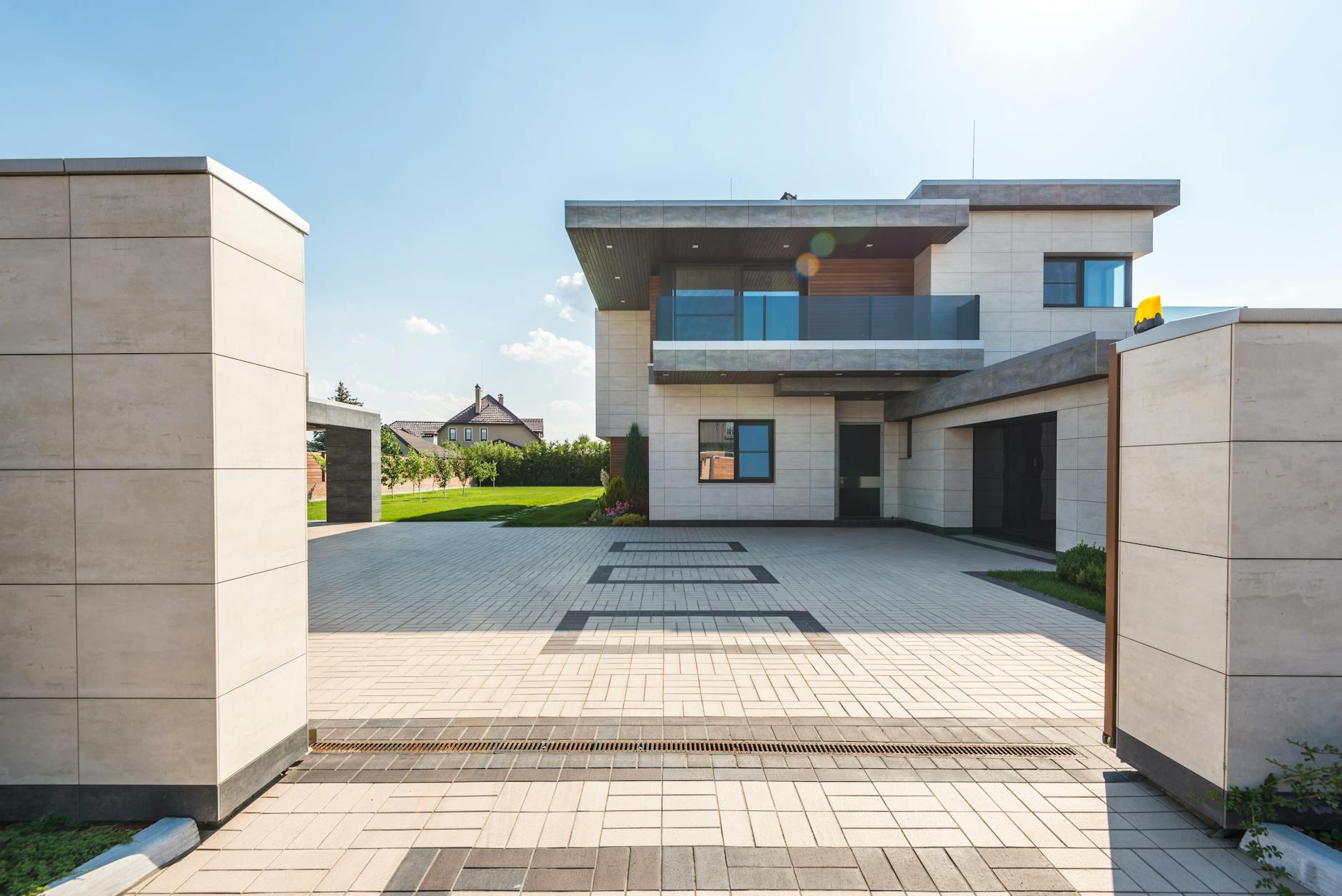
Unfortunately, many people think low maintenance gardens involve the use of extensive areas of plastic sheeting covered in gravel, or large areas of paving, and fewer plants.
An area that looks like a car park might be low-maintenance (though this is not always so) but it is difficult, really, to argue that it is a garden.
If you want a real garden, that should be a space filled with plenty of plants. Yes, there can certainly also be space for fun, relaxation and entertaining but there should also be life.
Gardens are spaces where we should be able to connect with nature, and rediscover our own places as part of the natural world. Even when our goal is to do as little work in them as possible, we can still turn our gardens into beautiful, abundant and productive spaces.
If you want a low maintenance garden that gives you a place to relax and unwind, grow your own, have fun and enjoy nature, first decide what low-maintenance means to you.
A low maintenance garden will require less work – but not none at all. Think carefully about how much work you can, and are willing, to do as you make design decisions.
Plan for Work-Saving and Efficiency – Begin With Permaculture Zoning
Fortunately there is a lot we can do to save time and effort when we are designing a garden from scratch or making a plan to overhaul an existing garden.
Anyone who has spend any time looking into permaculture will already be aware of the concept of zoning.
Permaculture zoning simply means considering the placement of different growing areas and elements according to how frequently we visit them.
The best designs usually involve placing those areas that we need to visit most frequently closest to the home or centre of operations. Those we need to visit less frequently are positioned further away.
Beyond this, we can analyse different elements we wish to include in our gardens to consider how they are connected to each other, the inputs and outputs that travel between them, and how frequently we will need to travel between them.
This can help us to work out the best layout for everything within the space available to minimise the time we will spend maintaining the different elements over time.
Choose Methods Tailored to You and Where You Live
What a low maintenance garden look like will vary considerably, not only due to differences in conception, but also due to differences in the work required to implement and maintain solutions in different settings.
Lower maintenance gardens are generally those whose methods, plants and practices are tailored to the specific setting. planting schemes and other garden elements can vary in how much work and maintenance they require based on the climate and other environmental factors within a specific space.
Always remember that no solution is a universal panacea. In permaculture, we spend time before we begin in observation and planning – truly getting to understand a space before we make design decisions.
To give an example – in an arid environment, the right earthworks for water catchment and drought-tolerant native planting ultimately make for a lower-maintenance scheme. But the same methods might be entirely counter-productive in higher-water areas.
You also need to understand yourself how you work, what you find a chore, and what garden work you actually enjoy. This can also have a bearing on which solutions you will find ‘low maintenance’ and which will be right for you.
Work With Nature Don’t Fight It

Much of the work in a garden comes from trying to prevent nature from, as it were, doing what it wants to do. A low-maintenance garden is one that embraces, at least to an extent, what would naturally occur if the space were left to its own devices.
Working with nature might include, for example:
- Allowing native wildflowers to grow among other chosen plants, in a wild lawn or in a dedicated ‘wild’ area of your garden.
- Choosing native plants and allowing these to spread and self seed through the garden.
- Avoiding, on the whole, areas of bare soil except where naturally created, since plants will tend to colonise spaces you leave empty. Plant densely, layer plants, and mulch between plants to reduce weed issues and protect the soil.
- Letting fallen leaves decompose where they fall to enrich the soil, and chopping and dropping for naturally cyclical soil-feeding systems.
Achieve Multiple Goals With a Single Solution
Multi-functionality is your friend if you want to create a low maintenance yet productive and beautiful garden.
Single, simple solutions that can help you achieve multiple goals can often be those that will also require the least work. Multi-functionality can reduce workload because you have more beneficial interactions in a system.
Embrace Perennials

Choosing perennial plants also often leads to a lower maintenance design, especially when these perennials find their homes within diverse, ecologically functioning systems that mimic natural ecosystems.
Forest gardens (like my own, pictured above) can take quite a lot of work to establish in the first place, but once established, they can be incredibly low-maintenance garden areas.
These layered planting schemes that mimic natural woodlands or forests yet incorporate plants, suited to the setting, that are useful for us. They are often a wonderful choice for a low maintenance garden.
Remember – You Don’t Have to Go Solo With the Right Garden Design
If trying to make the right choices for your garden feels overwhelming, remember that you do not have to go it alone. As a permaculture designer, I help my clients to create low-maintenance gardens suited to their specific location and goals.
If you would like to explore a practical and low maintenance design for your garden, with specific, actionable suggestions and advice, please do not hesitate to get in touch.
 EWSP Consultancy