
Permaculture designs help us to make the most of a current site and/or situation. But, of course, permaculture does not just concern itself with the here and now. Permaculture also looks forward.
In the context of garden design, permaculture can allow us to design for the present and the future, for a garden that is better tomorrow than it is today – not only stable and resilient but also improving.
The right design choices can allow nature to thrive and give a garden a small helping hand that enables positive future results. Here are some important elements to consider if you want your garden to get better over time:
Garden Design for a Changing Climate

Our global climate is changing. No matter how successful we are in curbing emissions and reversing global warming, we are on a boat that takes a very long time to turn.
The climate in our gardens will continue to change over the coming years, and this is something we always need to remember in creating designs.
Designing for a changing climate means thinking about adaptation as well as mitigation. There is of course a lot we can do in our homes and gardens to contribute to a brighter future.
But we also need to think about how a garden that works well today might be better in the future, as the environmental conditions alter and different plant species thrive.
An important step is choosing the right plants, those that suit a garden’s current environmental profile, but which are also suited to the conditions of the future.
For this, we don’t need a crystal ball. We can learn a lot from current science about predictions, and the most likely climate changes for our particular bioregional locations.
Learning some basic elements of climate science, we can determine plants for a garden that may do even better there in the future than they do today.
For example, if temperatures will rise and precipitation is expected to fall, xeriscaping and drought-tolerant solutions are important to consider.
Design With Perennials and Self-Seeding Plants
In permaculture design, the focus is often on perennial food production. This is for a range of reasons, not least because perennial plants will remain in your garden over many years, sequestering carbon and preserving and improving the soil.
Perennial plants, including trees and shrubs, will establish themselves in a particular setting and improve over time in their adaptation to the site and often also in their yields. This usually means that they should be the primary planting of any design.
Alongside perennials, it is also a good thing to consider self-seeding plants that contribute positively to the yields possible from your garden and/or to the garden ecosystem as a whole.
Annuals and biennials can self seed and slowly become better adapted to your specific environment over time, altering as it alters throughout the coming years. When growing annual plants, we can also selectively save our own seeds to contribute to this process.
Design that Considers Positive and Negative Interactions
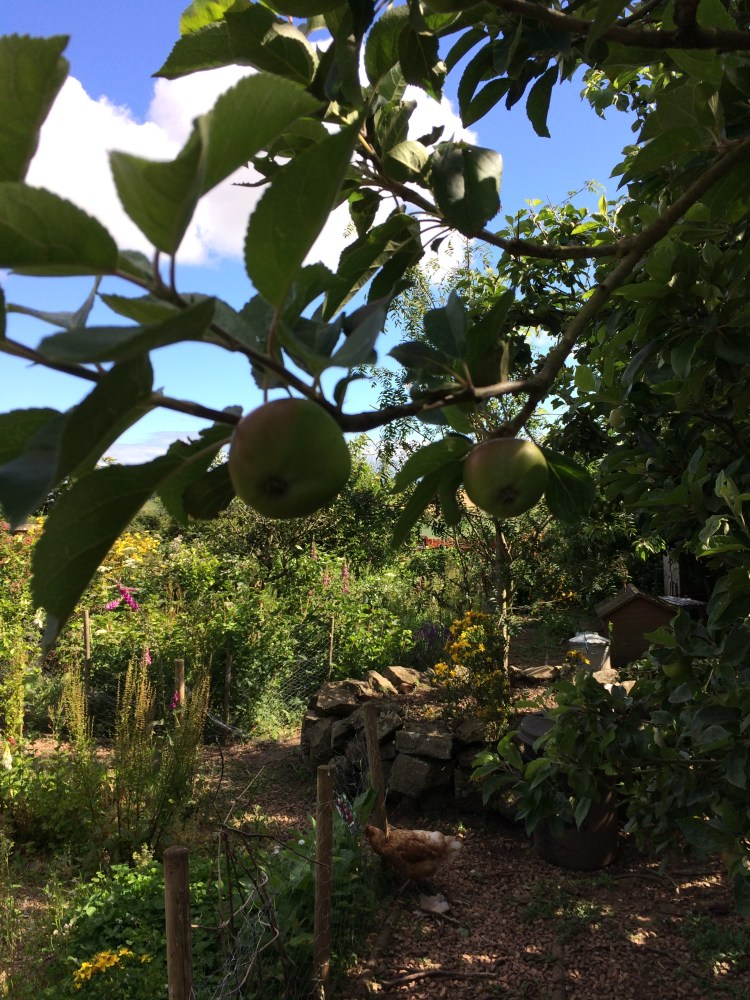
One mistake that novice gardeners often make is selecting plants in isolation, when what they should be doing is selecting communities of plants, and thinking about the growing area as a whole.
We should always aim to combine plants to maximise biodiversity, increase positive interactions and decrease negative ones within an ecosystem.
To do so, we need to think about the environmental needs of plants, their growth habits and root systems. We need to consider how they interact with the world around them and the impact they have on their neighbours.
By creating polycultures which maximise beneficial interaction, we can create more resilient and adaptable gardens in which competition will not become a problem, and in which biodiversity can continue to increase over time.
Permaculture Garden Design for Wildlife

One important thing to understand is that we are not the only agents in a garden who can improve things over time. Nature lovers will already be well-aware of all that wildlife does in a garden.
When we design for wildlife, choosing pollinator attractant plants, for example, and creating a range of different habitats, we are enlisting a range of helpers who can aid us in improving our gardens over time.
With the right design choices for a particular site, we can increase the number and varieties of different species over time, improving our gardens even without taking any additional steps ourselves.
Design that Understands Patterns of Seed Dispersal

My garden would look very different were it not for the way that seeds are dispersed, by the wind and particularly by birds and other wildlife.
Many very useful plants in my garden were not planted by me – just allowed to grow here by the initial design and by my gardening (and ungardening) practices.
One example that is particularly pertinent at this time of year are the wild raspberries that I have allowed to pop up in various different locations on the property.
It is raspberry season and I am reaping the benefits of my wildlife-friendly space. I can see clearly where raspberries pop up where birds have perched, below trees and at the base of fence posts.
A garden design should always leave space for natural development. If everything is too contained, we cannot understand and take advantage of natural seed dispersal.
If you would like some help, or a design for your property, please do get in touch.
 EWSP Consultancy