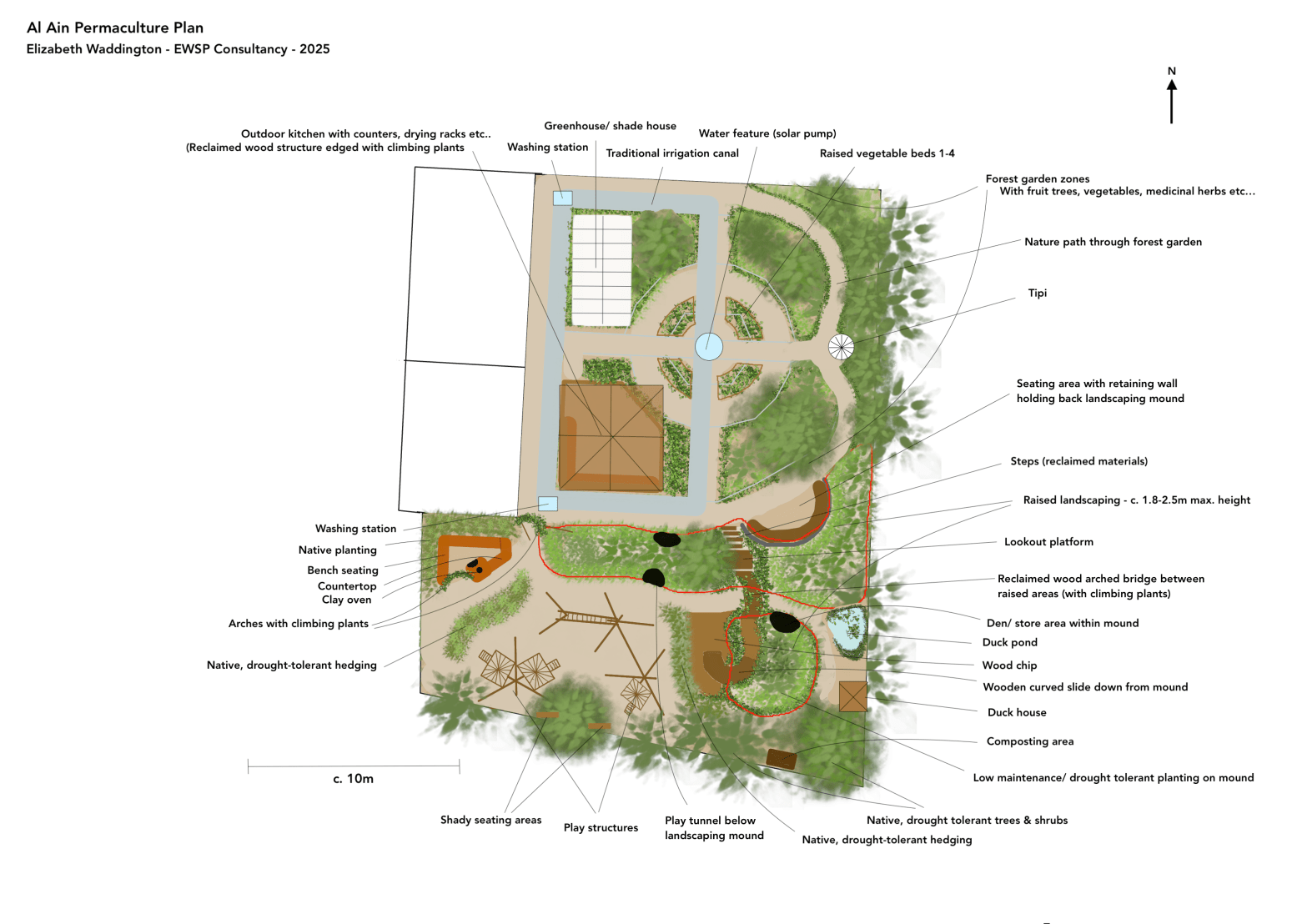
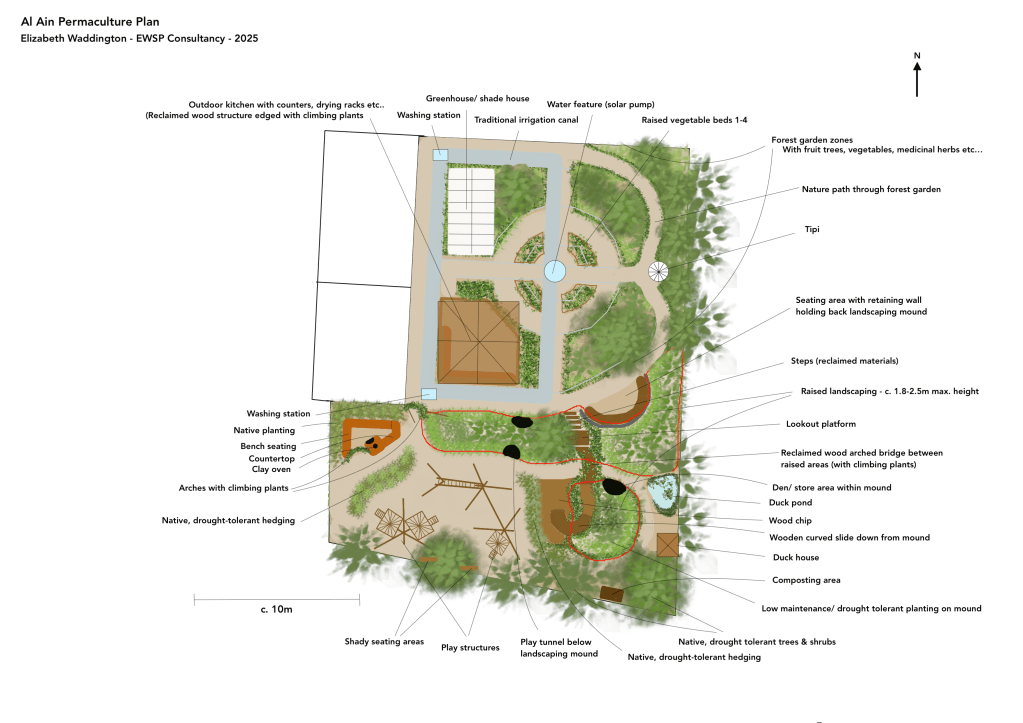
This is my design for a family-garden close to the Al Ain Oasis.
Al Ain lies in the eastern region of Abu Dhabi Emirate, approximately 340 metres above sea level. The area experiences a hot desert climate (Köppen BWh) with very high solar radiation, low annual rainfall, and high evaporation rates. Summers are extremely hot, with average daytime temperatures between 40–45 °C, and peaks above 48 °C. Winters are mild, with daytime temperatures between 20–28 °C and night-time lows occasionally near 10 °C.
Rainfall is low and irregular, averaging around 90–100 mm per year, mostly between November and March. The remainder of the year is almost completely dry. Humidity remains low inland, though occasional increases occur during winter or after rainfall. The UV index is very high year-round, particularly from April to September.
Soils are predominantly sandy or loamy sands, low in organic matter and nutrients, with limited water-holding capacity. Soil salinity may be an issue in some irrigated sites due to groundwater or evaporation. Building soil structure through organic amendments and maintaining surface mulch are key management practices.
Irrigation is essential for plant growth throughout most of the year. Efficient systems such as drip or bubbler irrigation are preferred to reduce evaporation losses. Shaded microclimates, windbreaks, and mulch layers help reduce transpiration stress and improve plant survival.
The growing season extends mainly from October to April, when temperatures and evapotranspiration rates are lower. The summer period (May to September) is used primarily for maintaining perennial species that tolerate high heat and for soil improvement rather than new planting.
Overall, successful cultivation in Al Ain depends on careful water management, soil improvement, and species selection adapted to high heat, intense sunlight, low humidity, and saline or low-fertility soils.
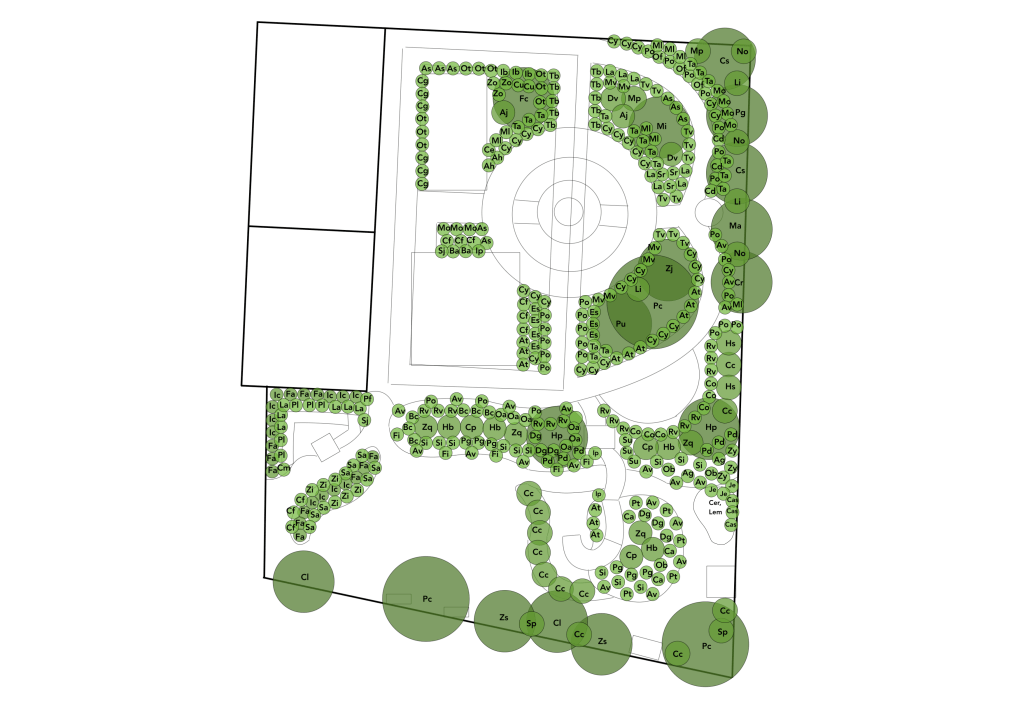
My planting plan (below) was provided for the client after discussion of the concept plan above.
Food Producing Zones
To the northern portion of the area, I have recommended learning from the traditional irrigation techniques used in the Al Ain Oasis and creating an irrigation canal (from which drip irrigation can be run into a naturalistic forest garden zone.
This canal will run around a greenhouse/shade-house for cultivation, and an outdoor kitchen area, through the centre of herb gardens, raised vegetable beds, and food forest zones with a water feature at their heart.
Raised Beds
Four raised beds for vegetable cultviation curve around the water feature at the centre of the space.
I recommend using either earth bags or adobe or reclaimed materials for bed edging, and filling beds using organic matter (lasagna style beds). I also provided an example planting plan for the cooler season – the image below.

Forest Garden Zone for Sustainable Food Production
Layered planting throughout the forest garden areas includes many edible and medicinal plants suited to the conditions. A relaxed path winds through this area. A tipi along this path provides another relaxation/ play space.
Play Zones for a Child-friendly Garden
The southern section of the site centres around fun and play, with largely low maintenance planting that will require far less irrigation on the whole.
Main areas for planting are on two large landscaping mounds that partition the space and create some division and privacy between different areas. There are also further areas of planting to further divide parts of this space and to provide more shade.
As can be seen in the planting plans and plant list, the focus for this part of the garden is on drough-tolerant native/ climate appropriate, low-maintenance planting to stabilise the slopes and provide many other benefits including wildlife attraction and human yields.
Key play features include steps to a lookout platform, and across a bridge to a slide going down one of the mounds, a play tunnel, a den area within a mound, as well as existing play structures. Seating areas around play zones provide places to sit and watch, or for some family time.
Tucked into the south-east corner of the site are a duck pond and duck house, with potential for some future livestock integration.
If you are interested in a similar child-friendly and climate appropriate design for your own garden, please get in touch.
 EWSP Consultancy