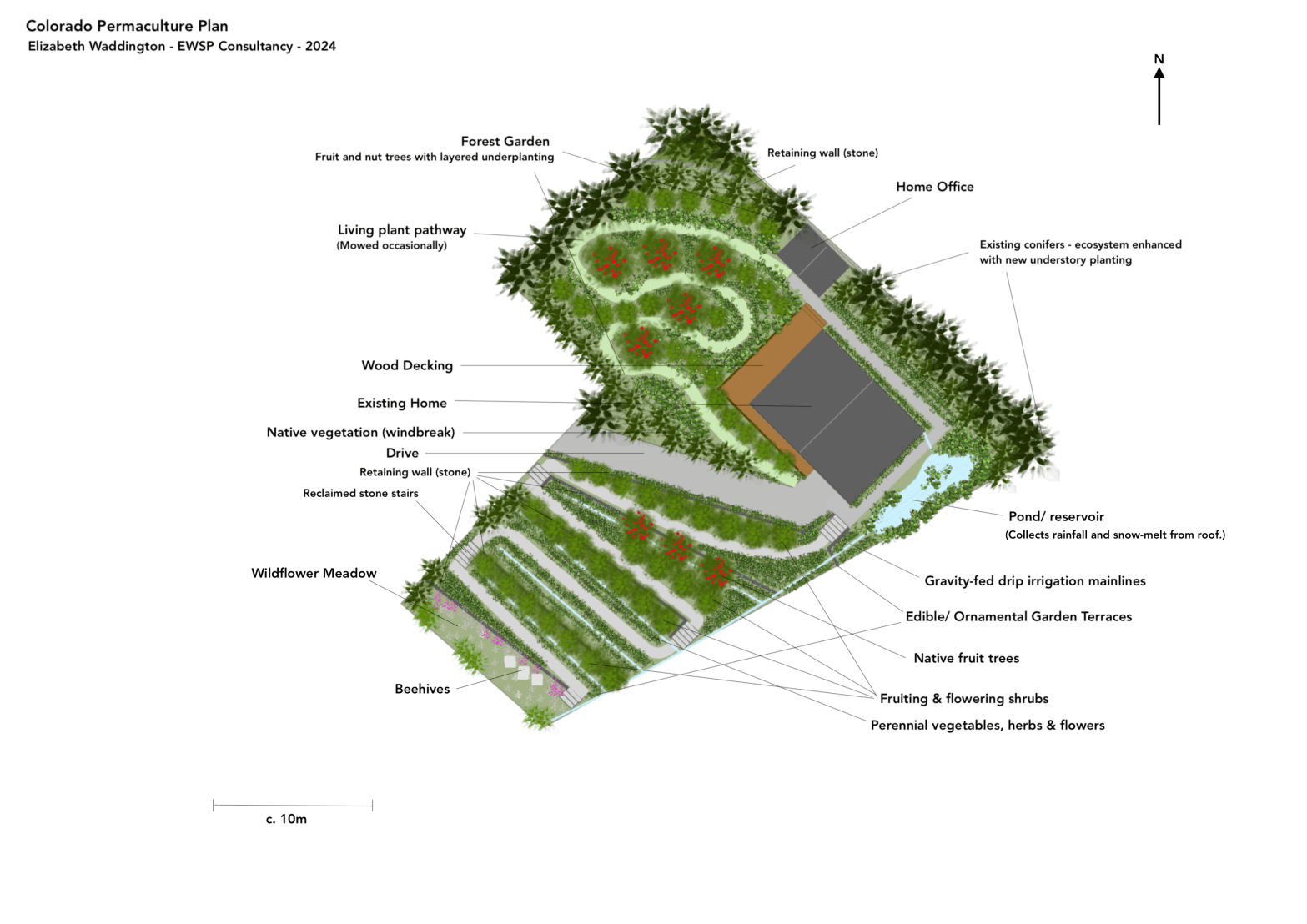
Perched high in the mountains, this Colorado homestead in the case study concept plan above has some truly stunning views. But the owners were unsure where to start when developing plans for their steeply sloping site.
They wanted to make sure that they could use the land for recreation and for food production, while also creating a visually-appealing scheme, and were particularly keen to grow as many berries and fruits as possible.
The Challenges of a Steeply Sloping Site
Like many others with mountain homes, the clients were struggling to find solutions for many of the most common challenges of this type of environment, including:
- Runoff and erosion.
- A lack of accessibility.
- A lack of relatively level land for gardening/ food production.
With a change of elevation of a little over 200 ft in around 40ft between the north and south of the property, most of that change occurring over 20ft on the southern part of the plot, the gradient is extreme, and runoff and erosion were already minor concerns in this lower part of the site.
The clients were also keen to address the problems with accessing the lower part of the property, in order to make the most of this part of their land, and wanted to create space to grow berry bushes and other useful and ornamental species within a short distance of their home.
Mountain Garden Design Solutions
Solutions for mountain gardens that are features of this particular design include:
- Terracing (gently sloped) and retaining walls – in this design made from natural, reclaimed stone sourced locally.
- Carefully chosen, layered planting: a combination of deep-rooted and shallow-rooted planting on slope, to stabilise the soil and reduce runoff and erosion.
- Gravity-fed irrigation to make the most of the change in elevation on this fairly sunny, south-west-facing slope.
Mountain Garden Design Tips
- Consider your specific location, including the soil, hydrology, specifics of the terrain and environmental factors before making any design choices. (Each mountain garden is unique.)
- Remember that slopes with different aspects have different strengths and weaknesses, opportunities and challenges. Considering the sun’s path across the property can be especially important – be sure to create a sun map and consider surrounding peaks and other landscape features casting shade at different times throughout the day and throughout the year.
- Look for plants suited to your elevation, and consider how the elevation as well as the slope impacts your design choices. Think about wind exposure, temperatures and other factors that will determine what will grow best where you live. Consider native plant choices wherever possible.
If you have a mountain property and are looking for a design, or someone to help you bring together your own ideas for your site, please do get in touch.
 EWSP Consultancy