Using native wildflowers in permaculture design is common, of course, but how exactly might native flowering plants be incorporated into your plans?
Permaculture design can often involve thinking about wild plants would naturally grow in a particular area, and then incorporating those plants in schemes that serve us, as humans, as well as the natural world.
These ideas might help you determine how best to incorporate native wildflowers (wherever you live) into your plans for your property:
Native Flowers in Beds and Borders
Whether schemes are designed to produce food, or be ornamental, or both, native wildflowers can frequently find their places in beds and borders.
We may sometimes have been trained to believe that certain wildflowers belong in the category of ‘weeds’, they may also be useful edibles, or ornamental plants – sometimes both.
In my own garden, many native wildflowers find a place in beds and borders. For example, common chickweed, Stellaria media, makes a useful companion plant in my vegetable beds.
Many native wildflowers enrich the biodiversity of my forest garden areas, and grace ornamental beds. Some of these were deliberately sown or planted and some were brought in by the wind or wildlife.
Just some of the native wildflowers found in my garden beds, borders and planting areas are:
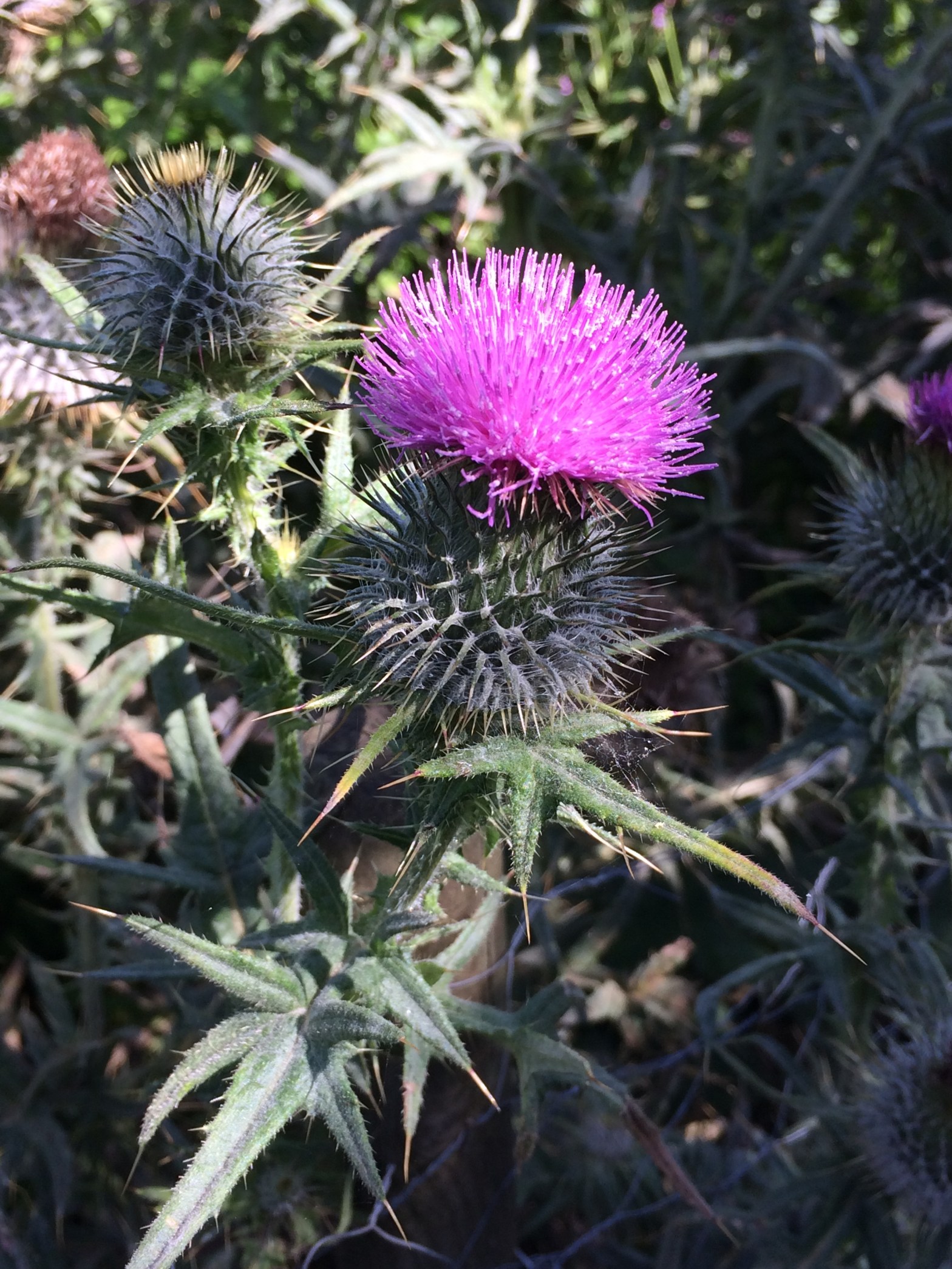
red campion (Silene dioica), betony (Betonica officinalis), common knapweed (Centaurea nigra), speedwells (Veronicas), oxeye daisies (Leucanthemum vulgare), cow parsley (Anthriscus sylvestris), cow parsnip/ common hogweed (Heracleum maximum) and common thistle (Cirsium vulgare)…
The first four species are found along a border beside a hedgerow on our property.
Speedwells and oxeye daisies are in a perennial bed, cow parsley is in an informal woodland-edge border, blending into a wild lawn, and the common hogweed and thistles find places in my forest garden.

There are many, many more throughout my garden, too, interspersed with some non-native edibles and a few other non-native plants suited to the conditions where I live.
Of course, which wildflowers you might include in beds, borders or other key growing areas in your garden will depend on where precisely you live.
Remember, it is always important to understand your local bioregion and to choose plants specifically for your precise location and the conditions to be found there.
To choose the right wildflowers for you, be sure to look at:
- Broad climate (and more specific micro-climate) conditions on the site.
- Whether plants are locally native, or merely more broadly so.
- The specific growing requirements of the specific plants in question.
You should also be sure to look at plants not only in isolation, but as groups, or polycultures of native plants. We can frequently learn a lot about the best companions by considering which plants grow together naturally in the wild.
Wildflower Lawns & Meadows
One of the most common ways to use wildflowers is not to incorporate them into existing growing areas, but rather to create whole areas devoted to them.
Lawns and meadow schemes, often incorporating grasses alongside the wildflowers but not invariably, are increasingly popular.

Wildflower lawns or meadow planting schemes can be especially useful for open, sunny areas, though there are also wildflower mixes suited to partial or dappled shade, and even some wildflowers that can cope with deeper shade conditions.
The important thing to remember is that a wildflower meadow mix that suits one location will not suit another.
So try to avoid purchasing non-area-specific wildflower seed mixes and instead look for one suitable for your particular bioregion and specific garden, or create your own mix if one is not readily available.
Mixes can include perennial wildflowers only, or incorporate annual and biennial self-seeders. one thing to look out for is whether the mix contains leguminous nitrogen fixers. If it does, this can be beneficial for the long-term health of the habitat.
Another thing to look at, of course, is making sure that there is a biodiverse range of plants that bloom over as long a period as possible. Since this can help ensure that there is nectar and pollen for pollinators in your garden throughout the year.
Perennial Wildflowers in Rain Gardens

Rain gardens are another feature common in permaculture design in which wildflowers are frequently used. You can see examples of some of my designs that have incorporated rain gardens by following the link above.
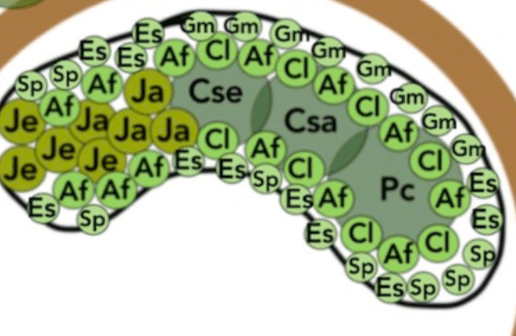
Wildflowers suitable for rain garden designs might usefully be separated into those for the damp bottom of a rain garden basin, those for the sides, and those that like the dry conditions around the fringes of the infiltration area.
Here is an example plant list from a specific rain garden project in Washington State:
Rain Garden Plant List:
- Af – Aquilegia formosa
- Ja – Juncus acuminatus
- Je – Juncus ensifolius
- Cl – Camassia leichtlinii
- Csa – Cornus sanguinea ‘Midwinter Fire’
- Cse – Cornus sericea ‘Kelseyi’
- Es – Erigeron speciosus
- Gm – Geum macrophyllum
- Pc Physocarpus capitatus
- Sp – Silene parryi
Native Wildflower Living Roofs
Even when space in a garden is limited, there are some interesting ways to think about incorporating some wildflowers in a design. Green roof or living roof designs may sometimes be an option to consider.
Anywhere a turf roof is used, a meadow roof with wildflowers might work instead. Sedum roofs are also popular and common, but there are also, of course, a range of native plants that could work for different roofs in different settings.
Container Gardening With Native Wildflowers
Of course, even when garden space does not allow for any of the options above, native wildflowers might still be grown in containers in even the smallest of spaces.
On a roof terrace or balcony, in a small courtyard or even in window boxes, it is possible to embrace native wildflowers and bring benefits to pollinators in the area where you live.
Please do get in touch for a design or consultancy if you need some help to work out which wildflowers to grow and where to grow them in your garden.
 EWSP Consultancy