When I speak to people about what I do as a garden designer, or show people my own garden, I often get one of two different reactions.
People who are already keen gardeners tend to lean in, ask questions, and try to learn more, if they come across an idea with which they are not already familiar.
Others, however, often those who are not gardeners already, have a reaction that is pleasant – but disengaged. Since they themselves are not gardeners, they seem to be thinking that these ideas and practices are not for them – even when they admire them.
Some people seem to have a mental block when it comes to gardening and feel that they are ‘just not green fingered’. Of course, gardening is something everyone can do – even those not lucky enough to have any outside space.
Permaculture gives us a range of wonderful solutions for a range of situation – in gardens and far beyond. But finding the right solutions can sometimes be as much about finding a fit with specific people as it is about finding the plants and methods suited to a particular space.
These permaculture garden design ideas for reluctant gardeners are some strategies that can help convert even the least green fingered to a little home growing:
1. Begin By Looking at the Big Picture
Reluctant gardeners may often be put off at the first hurdle by too narrow a focus. The garden design process begins by taking a broader view, before we hone in on the details.
This approach can be helpful to reluctant gardeners too, since it can allow them to take in a beautiful garden space and put everything in context without being distracted by slugs, aphids, or some other issue that discourages them from the beginning.
2. Start a Small Permaculture Garden and Build Slowly

I have heard a lot of statements from new gardeners or would-be permaculture practitioners that mistakenly believe that a permaculture garden is one thing or another. I have heard people say “I’d love to implement permaculture ideas but I don’t have enough space.” for example, and “…permaculture ideas would not work here.”
Delve a little deeper into permaculture in practice, however, and you soon discover that permaculture gardens can be hugely diverse.
From the small container with companion planting, to polyculture raised beds and full forest gardens – the solutions we can use in a permaculture garden are many and varied.
No matter how much space is available, however, choosing the right ideas and strategies to implement in any garden is important.
By starting small and building slowly towards the garden you would ultimately like to see, you can avoid a range of common problems and minimise risk.
Trying out several different ideas on a small scale can help reluctant gardeners work out what type of growing they might enjoy most, and also, of course, makes sure that they have not put all their eggs in one basket.
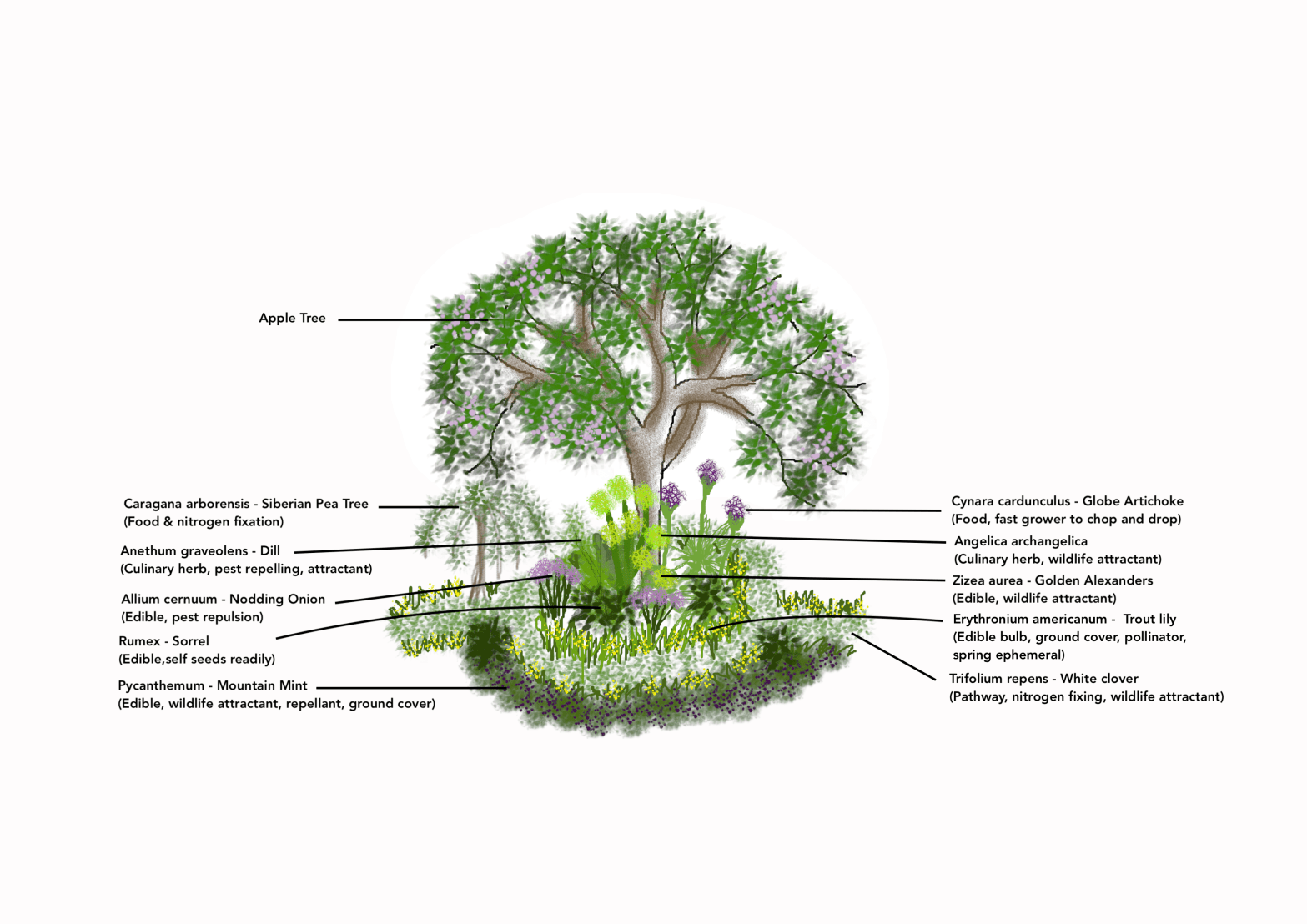
The most common way to begin is with a few containers or a raised bed. But of course a perennial planting plan like a fruit tree and guild or small forest garden could be a good option in many settings too.
3. Set a Series of Achievable Goals in a Permaculture Garden
When reluctant gardeners consider starting a garden, they often see a massive uphill struggle in front of them. Breaking down everything into a series of small, achievable goals can definitely make it seem more manageable, even for those with little to no gardening experience.
When starting out, getting a few simple things in place can make the gardener’s life a whole lot easier later on. Setting up a rainwater harvesting system, for example, can be a simple win and can set you up for success.
Composting is also essential, and does not need to be over-complicated. Remember, composting occurs without our assistance, and sometimes we can just let natural systems work, without having to intervene too much. Of course there is more to learn about composting. But gardeners new to the process don’t need to learn everything overnight.
Completing simple tasks like setting up a rainwater harvesting system or composting system can help reluctant gardeners ease into things one step at a time.
4. Look at What is Already Available
Some people are discouraged from starting a garden by what they perceive as a need to purchase a range of items. But the development of a permaculture garden often involves far less monetary investment than you might imagine.
To create a permaculture garden, we always start with what is already there. We don’t throw the baby out with the bathwater when creating a new design – saving plants and existing features where these do work well, while altering things that could be better. We also always make the most of natural ‘resources’.
New, reluctant gardeners are often surprised to find out how many useful materials they already have that can be used in the creation of a new garden – both natural and reclaimed.
5. Welcome in Wildlife
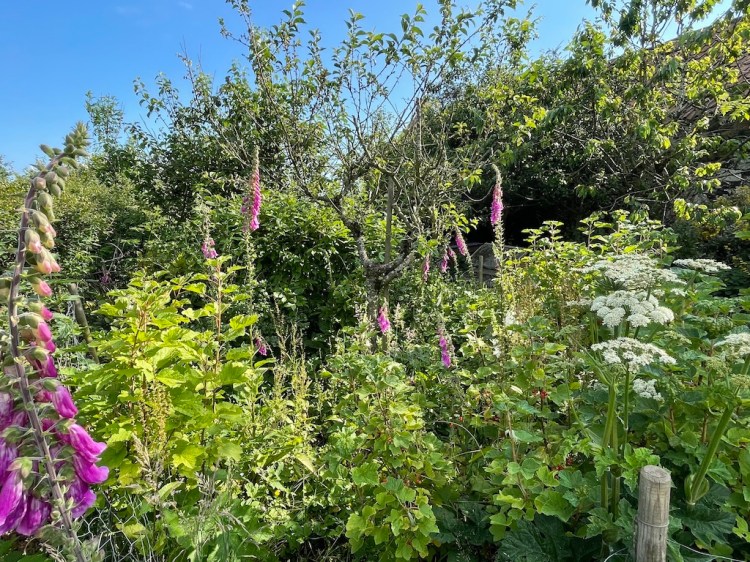
I have personally seen how wonderful wildlife can be for converting reluctant gardeners. After the creation of a permaculture garden, people soon see the impact of designing to welcome wildlife to the space.
They may be drawn to spend more time in a garden, watching beautiful birds or enjoying butterflies and bees fluttering and buzzing among the flowers. The links between the permaculture practices and the wildlife slowly begins to become clear and a burgeoning interest in organic gardening can emerge.
6. Keep Maintenance to a Minimum, and Prioritize Ease

Like so many others, I never seem to have enough time. With a full time job, a renovation project, a large garden and other obligations, sometimes there are just not enough hours in the day. But as I know first hand, permaculture can help us create low-maintenance perennial planting schemes that do not require so much of our time.
Forest gardens or other perennial planting schemes are ideal to show reluctant gardeners that it is possible to create abundant and beautiful spaces that don’t take up as much of their time. Though no garden is truly zero maintenance, carefully chosen and implemented perennial schemes can certainly come close.
7. Measure Successes – However Small

Last but not least, permaculture exhorts us to obtain a yield. Yields can be both tangible and intangible, and whatever we get from our permaculture gardens we should be sure to celebrate it.
Marking and measuring our successes, large and small, can help us to show even the most reluctant of gardeners the many benefits that come from permaculture gardening.
 EWSP Consultancy